%22%2F%3E%0A%20%20%3Cg%20transform%3D%22translate(666%20410)%20scale(8.542)%22%20fill%3D%22none%22%20stroke%3D%22%23f9fafb%22%20stroke-width%3D%222%22%20stroke-linecap%3D%22round%22%20stroke-linejoin%3D%22round%22%20opacity%3D%220.3%22%3E%0A%20%20%20%20%3Crect%20x%3D%223%22%20y%3D%223%22%20width%3D%2218%22%20height%3D%2218%22%20rx%3D%222%22%2F%3E%0A%20%20%20%20%3Ccircle%20cx%3D%229%22%20cy%3D%229%22%20r%3D%221.8%22%2F%3E%0A%20%20%20%20%3Cpath%20d%3D%22M21%2015l-5-5L5%2021%22%2F%3E%0A%20%20%3C%2Fg%3E%0A%20%20%3Ctitle%3EGender-Affirming%20Body%20Contouring%20Explain%3C%2Ftitle%3E%0A%3C%2Fsvg%3E)
Gender affirming body contouring encompasses a range of surgical and non-surgical procedures designed to reshape the body in ways that align with a person's gender identity. For many transgender and non-binary individuals, the disconnect between body shape and identity — particularly the distribution of fat and the definition of certain contours — creates significant psychological distress. These procedures address that distress directly, targeting areas like the waist, hips, chest, and buttocks to create a silhouette that feels authentic.
This isn't cosmetic surgery in the conventional sense. The motivation runs deeper, and so do the results. Research consistently shows that gender affirming interventions, including body contouring, are associated with meaningful improvements in mental health, quality of life, and overall wellbeing. When performed by a surgeon who understands the nuances of gender diverse anatomy and goals, the outcomes can be genuinely transformative — not just physically, but in how someone moves through the world each day.
What Is Gender Affirming Body Contouring?
Gender affirming body contouring is a category of surgical and non-surgical procedures designed to reshape the body in ways that align more closely with a person's gender identity. Rather than following a single template, it's a deeply individualised field — one that considers how fat is distributed, how the silhouette reads, and how a person feels moving through the world in their own skin.
The scope is broad. For transgender women and transfeminine individuals, procedures often focus on creating softer, more rounded contours — think hip and buttock augmentation, waist refinement, or fat redistribution to feminise the overall shape. For transgender men and transmasculine individuals, the goal typically shifts toward building a more angular, defined physique, which may involve liposuction to reduce curves associated with a feminine frame or chest-adjacent contouring to complement top surgery results.
Non-binary individuals may seek contouring that doesn't move toward either binary extreme — instead pursuing a more neutral or personally specific aesthetic that simply feels right.
What sets this work apart from general cosmetic body sculpting is intention. The procedures themselves — liposuction, fat grafting, high-definition sculpting — may overlap with mainstream cosmetic surgery, but the clinical context, the goals, and the patient experience are distinct. Outcomes are measured not just by symmetry or proportion, but by how well results support a person's sense of self.
This is medicine that listens first. The technical work follows from understanding who someone is and what they need.
Key Benefits of Gender Affirming Body Contouring
 %22%2F%3E%0A%20%20%3Cg%20transform%3D%22translate(666%20410)%20scale(8.542)%22%20fill%3D%22none%22%20stroke%3D%22%23f9fafb%22%20stroke-width%3D%222%22%20stroke-linecap%3D%22round%22%20stroke-linejoin%3D%22round%22%20opacity%3D%220.3%22%3E%0A%20%20%20%20%3Crect%20x%3D%223%22%20y%3D%223%22%20width%3D%2218%22%20height%3D%2218%22%20rx%3D%222%22%2F%3E%0A%20%20%20%20%3Ccircle%20cx%3D%229%22%20cy%3D%229%22%20r%3D%221.8%22%2F%3E%0A%20%20%20%20%3Cpath%20d%3D%22M21%2015l-5-5L5%2021%22%2F%3E%0A%20%20%3C%2Fg%3E%0A%20%20%3Ctitle%3EKey%20Benefits%20of%20Gender%20Affirming%20Body%20Co%3C%2Ftitle%3E%0A%3C%2Fsvg%3E)
For many transgender and non-binary individuals, gender affirming body contouring offers something that clothing, posture, and even hormones cannot fully achieve: a physical form that genuinely reflects who you are. The benefits extend well beyond aesthetics.
Alignment between identity and appearance. The most fundamental advantage is congruence. When your body's silhouette matches your internal sense of self, daily life shifts in meaningful ways — less mental energy spent managing dysphoria, more capacity for simply living. Patients frequently describe this as feeling "at home" in their bodies for the first time.
Targeted reshaping where hormones fall short. Hormone therapy does remarkable work, but it has biological limits. Fat redistribution, skeletal structure, and existing tissue don't always respond fully or predictably. Gender affirming body contouring addresses these gaps directly — whether that means reducing waist-to-hip ratio, creating more defined masculine flanks, or softening areas that feel incongruent.
Durable, predictable results. Unlike padding, compression garments, or other external solutions, surgical contouring produces lasting structural change. Results stabilise over months and, with appropriate weight maintenance, remain consistent long-term.
Improved psychological wellbeing. Research consistently supports what patients already know. Reduced gender dysphoria correlates with measurable improvements in anxiety, depression, and overall quality of life. Body contouring, as one component of a broader affirmation journey, contributes meaningfully to that shift.
Expanded freedom in everyday life. Clothes fit differently. Swimming, exercise, and intimacy become less fraught. Social situations that once required careful navigation become more straightforward. These practical freedoms matter enormously.
Personalised to your goals. There is no single template. Procedures are planned around your anatomy, transition stage, and specific priorities — making this a deeply individual process rather than a standardised intervention.
How Gender Affirming Body Contouring Works
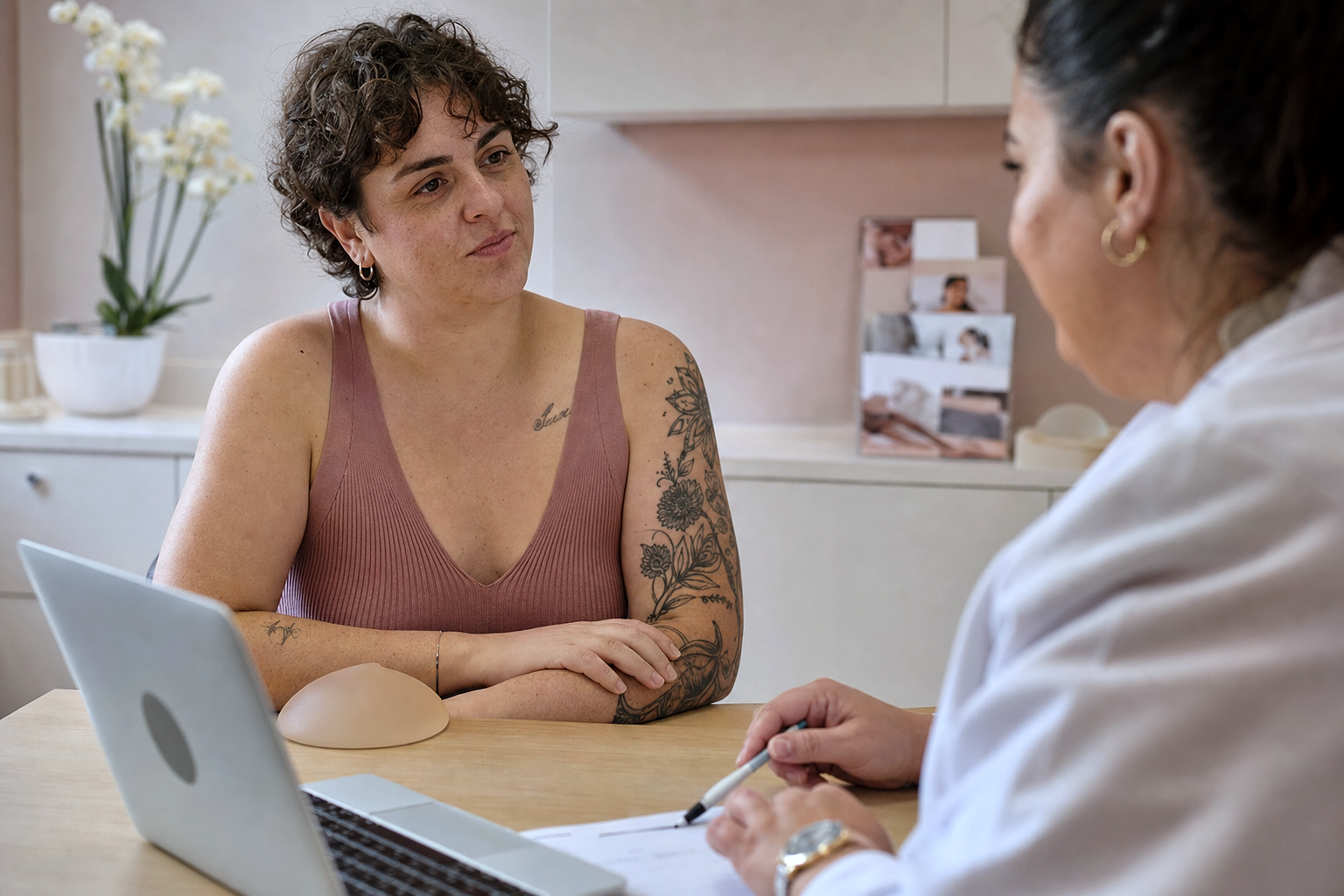
Gender affirming body contouring reshapes the body's silhouette to align more closely with a person's gender identity. It's a carefully planned process that combines surgical technique with a deep understanding of how masculine and feminine proportions differ anatomically.
The process begins with a thorough consultation. Your surgeon will assess your current body shape, skin quality, fat distribution, and underlying muscle structure. Equally important is understanding what you want — which areas feel misaligned, and what a more affirming silhouette looks like for you specifically. There's no universal template here.
From there, a surgical plan is built around your goals. For those seeking a more feminine contour, this typically involves liposuction to reduce bulk from the waist, back, and flanks, combined with fat transfer to the hips and buttocks to create softer, rounder proportions. The goal is to establish a waist-to-hip ratio that feels congruent.
For those moving toward a more masculine silhouette, the approach shifts. Fat is often removed from the hips and thighs to reduce curves, while techniques like high-definition liposuction can be used to accentuate the abdomen and define the flanks. Chest masculinization may also be incorporated depending on the overall plan.
On the day of surgery, most procedures are performed under general anaesthesia. Incisions are placed discreetly, fat is removed or repositioned with precision, and the tissues are reshaped to achieve smooth, natural-looking results.
Recovery unfolds in stages. Initial swelling resolves over several weeks, but the final contour continues to refine over three to six months as tissues settle. Compression garments are worn during healing to support the new shape and reduce fluid accumulation.
Throughout every stage, the focus remains the same — creating a body that feels like yours.
Common Questions About Gender Affirming Body Contouring
What exactly is gender affirming body contouring? It's a range of surgical and non-surgical procedures designed to reshape the body in ways that align with a person's gender identity. This might mean softening curves, creating them, or redistributing volume — depending entirely on individual goals.
Who is a good candidate? Most adults in stable overall health can be considered. A thorough consultation helps determine which procedures suit your anatomy, timeline, and transition goals. There's no single profile that qualifies someone — your experience and needs guide the conversation.
How is this different from standard cosmetic surgery? The intent and approach differ meaningfully. Gender affirming body contouring is shaped by an understanding of gender dysphoria, transition goals, and the psychological weight these changes carry. Surgeons experienced in this space think differently about outcomes than those performing purely aesthetic work.
Will results look natural? When performed by a specialist with real expertise in gender affirming body contouring, results are designed to feel cohesive — not exaggerated. The goal is a body that feels like yours.
Is it covered by insurance? Coverage varies widely by plan and location. Many procedures qualify under gender dysphoria diagnoses, but documentation and pre-authorization requirements differ. A knowledgeable patient coordinator can help you navigate this.
How long is recovery? It depends on the procedures involved. Targeted liposculpture may require a week or two of downtime, while more extensive contouring can mean four to six weeks before returning to full activity.
Conclusion
Gender affirming body contouring brings together surgical precision and deeply personal intention. It's not cosmetic change for its own sake — it's the alignment of physical form with identity, and for many patients, it marks a profound turning point.
The key takeaways are straightforward. Results depend on honest consultation, realistic expectations, and choosing a surgeon who understands both the technical and human dimensions of this work. Recovery takes time. Staged procedures are often smarter than trying to accomplish everything at once. And long-term satisfaction is highest when treatment is tailored to your specific anatomy and goals, not borrowed from a generic template.
If you're exploring your options, the most valuable next step is a consultation with a board-certified plastic surgeon who specialises in gender affirming care. Come prepared with questions, images that reflect your goals, and an openness to honest clinical dialogue. That conversation is where the real process begins.